Deodorization process is used to remove compounds that lend an unappealing or overpowering aroma or taste in an oil. This is generally done by blowing high temperature steam through the oil to vaporize the aromatic components. This process is made more effective by heating the oil to high temperatures and performing this process under a vacuum to help remove all of the odorous substances. Due to the high temperatures used, deodorization is clearly the most damaging process of refinement
EDIT: Here is information from another website that perfectly describes extraction methods for Essential oils. www.aromaworld4u.com a great website for people interested in aromatherapy and essential oils. Here is a repost from their website on essential oil extraction:
Essential Oil Extraction Methods
The term "essential oil" is generally applied to all aromatic products such as essence oils, absolutes, resinoids, and concretes. To get essential oils the aromatic essence molecules of the plant must be captured by technical extraction methods. Essential oils are liquids stored in various places in plants, that can be removed from the plant using extraction methods such as steam distillation, cold pressing, chemicals, or fat-absorption.
Essential oils can be extracted using a variety of methods as mentioned above, although some are not commonly used today. Presently, the most popular method for extraction is steam distillation and the majority of essential oils used in aromatherapy are distilled in this way, but as technology is advancing, more efficient and economical methods are being developed.
The extraction of an oil require large quantity of plant material and the method used to extract the oil is time consuming and requires a high degree of skill and care. Hence, pure essential oils are expensive, but they are also highly effective - only a few drops at a time are required to achieve the desired effect.
Essential oils are usually liquid, but can also be solid, like orris root or semi-solid according to temperature, like the rose. They dissolve in pure alcohol, fats and oils but not in water.
Some of the important methods of extraction are discussed below :
Distillation
In this, water is heated to produce water vapor, which carries the volatile chemical of the aromatic material with it. The water vapor is then condensed using a condenser and the resulting distillate is collected. The essential oil will normally float on top of the hydrosol (the distilled water component) and is separated out.
Water Distillation In water distillation, the botanical material is completely immersed in water and then is boiled. This method protects the oil to be extracted to a certain degree since surrounding water prevents it from overheating.
Then it is condensed and cooled down. The oil is then separated out, as it layers on the top of the water. The water separated out in this process is termed as floral waters (also called hydrosol or sweet water) such as rose water, orange water and lavender water.
Water distillation can be operated at low pressures to reduce boiling temperature. This helps in protecting the botanical material and essential oil as well.
This method is used for extraction of oils that are sensitive to heat.
If a lot of exposure to hot water is not mentioned for a particular plant such as lavender, it is best to find an extraction method better suited.
Any botanical material that contains high amounts of esters do not take well to this extraction method, since the exposure to hot water will break down the esters into alcohols and carboxylic acids.
Steam Distillation Steam distillation is the most common method of extracting essential oils. Steam distillation is done in a still (The still is tall with a head and a well-insulated swan's neck preceded by a mechanism to prevent fumes and impurities passing through). Fresh, or sometimes dried, botanical material is placed in a closed container of the still, and pressurized steam is generated which enters the container and circulates through the plant material. The heat of the steam forces the intercellular pockets that hold the essential oils to open and release them. The temperature of the steam should not be very high as it can damage the botanical material but should be high enough to open the pockets which hold the essential oil.
Tiny droplets of essential oil evaporate and attach to the steam. The steam which then contains the essential oil, is passed through a cooling system to condense the steam, which forms a liquid from which the essential oil and water is then separated by decantation. The oil forms a layer on the water surface as it does not dissolves in water and hence is separated easily.
This method is not used for extraction of oils that are sensitive to heat
Hydro Diffusion Hydro Diffusion method for extraction of oils is a type of steam distillation and is only different in the way in which steam is enters the container of the still. In hydro diffusion, steam is fed in from the top onto the botanical material while in the case of steam distillation, steam is fed from the bottom. In this way the steam can saturate the plants more evenly and in less time than with steam distillation.
The condensation of the oil containing steam mixture occurs below the area in which the botanical material is held. The main advantage of this method over steam distillation is that less steam is used hence shorter processing time and therefore a higher oil yield. This method is also less harsh on the botanical material.
Fractional Distillation When we say fractional distillation, it only refers to normal distillation process. In this only difference is that the oil is not collected continuously, but is collected in parts i.e. fractions and oil normally so extracted is Ylang-Ylang oil.
Rectification When an essential oil contains any impurities, it can be purified by re-distillation, either in steam or in vacuum and this purification of oil by re-distillation is referred to as rectification.
This process is used to make oils of standard quality. An example of rectification is eucalyptus oil.
Cohobation: In some essential oil extractions, some chemical or part of the essential oil gets dissolved in water and therefore gets removed from the oil. So to get the whole oil, we add the deficient chemical to the deficient oil and re-distillation is done until we get the complete oil. An example of this is rose oil.
Expression
This method is used to extract citrus essential oils. It is basically a cold pressed method of extraction.
Sponge Expression Most citrus essences are extracted by means of expression, and in the past were done by hand where the fruit pulp was removed, with the rind and pith then soaked in warm water to make the rind more pliable, since the pith of the fruit absorbed the water.
After the fruit has absorbed the water and become more elastic, it was inverted which helped to rupture the oil cells and a sponge placed next to the rind. It was then squeezed to release the volatile oil, which was then collected directly into the sponge.
As soon as the sponge became saturated with oil, it was squeezed and the essential oil collected in a vessel and then decanted.
Cold-pressed Expression Another expression method of extracting essential oils is coldpressed expression, or scarification method. It is used to obtain citrus fruit oils such as bergamot, grapefruit, lemon, lime, mandarin, orange, and tangerine oils. In this process, fruit rolls over a trough with sharp projections that penetrate the peel. This pierces the tiny pouches containing the essential oil. Then the whole fruit is pressed to squeeze the juice from the pulp and to release the essential oil from the pouches. The essential oil rises to the surface of the juice and is separated from the juice by centrifugation.
It is important to note that oils extracted using this method have a relatively short shelf life, so make or purchase only what you will be using within the next six months.
Although many citrus oils are also produced by steam distillation, they seem to lack the vibrancy of the cold pressed oils.
Machine Abrasion Machine Abrasion is very much same as cold-pressed expression method and is mainly used in extraction of citrus essential oils.
In machine abrasion, a machine strips off the outer peel of the botanical material, which is then removed by running water and left over is then fed into a centrifugal separator.
The centrifugal separation is done extremely fast. But, it should be noted that due to the fact that the essential oil is combined with other cell content for some time, some alteration could occur in the oil due to enzymatic action.
Solvent Extraction
In this extraction method, solvents are used to extract the essential oils from the botanical material.
Solvent Very delicate aromatics, Jasmine, Linden Blossom, etc. can not survive the process of distillation. To capture their magical aromas, a process of solvent extraction is used.
A hydrocarbon solvent (usually hexane) is added to the botanical material to help dissolve the extractable matter from the botanical material which includes non-aromatic waxes, pigments and highly volatile aromatic molecules. When this solution is filtered and then the filtrate is subjected to distillation at low pressure, a substance containing resin (resinoid), or a combination of wax and essential oil (known as concrete) is left.
The concrete is further processed to remove the waxy materials which dilute the pure essential oil. To prepare the absolute from the concrete, the waxy concrete is warmed and stirred with alcohol (usually ethanol). When we heat and stir the concrete, it breaks up into minute globules, and separation takes place as aromatic oil is more soluble in alcohol than that in wax. But along with the aromatic molecules a certain amount of wax is also dissolved and this can be removed only by agitating and freezing the solution at very low temperatures (around minus 35 degree celsius). In this way most of the wax precipitates out. As a final precaution the purified solution is cold filtered leaving only the wax-free material (the absolute) i.e. the essential oil.
This solvent extraction actually yields three usable products; first the concrete (as in rose concrete, my favorite solid perfume), the precious absolutes i.e. the oils, and the floral waxes, for addition to candles, thickening creams and lotions as a softly floral scented alternative to beeswax.
Although more cost-efficient than enfleurage, solvent extraction is more expensive than steam distillation so it is reserved for costly oils which cannot be distilled.
This is not considered the best method for extraction of essential oils, as the solvents can leave a residue behind which could cause allergies and effect the immune system, but it's great for making resins for this very reason.
Maceration Maceration actually creates more of an "infused oil" rather than an "essential oil" and is most often used for creating extracts and resins.
The botanical material is soaked in vegetable oil, water, or another solvent. If it's soaked in vegetable oil, and then heated and strained, it can be used for massage and if soaked in water or another solvent such as alcohol, will create a much thicker extract or resin.
Enfleurage Enfleurage is a very labour-intensive way of extraction and an expensive process. Therefore it is rarely used today. In some cases where flowers, such as jasmine or tuberose, have very low contents of essential oil and are extremely delicate, heating them would destroy them before releasing the essential oils, enfleurage is used to remove the essential oils.
Flower petals are placed on solid sheets of warm fat, which will absorb the essential oil from the flowers. When all the fragrance is transferred from the flowers to the fat they are removed and replaced with fresh ones. This process is repeated several times until the fat becomes saturated with the essential oil.
A solvent, usually alcohol, is then added to the saturated fat which separates the essential oil from the fat. The remaining fat is then used to make soaps.
Enfleurage has the advantage that even the most delicate components of the flower oils are preserved
Hypercritical Carbon Dioxide (CO2) The use of hypercritical carbon dioxide extraction is a fairly new way to extract essential oils from botanical material and although a bit on the expensive side, does yield good quality oils.
Carbon dioxide becomes hypercritical at 33 degrees celsius, which is a state in which it is not really gas or liquid, but has qualities of both, and is an excellent solvent to use in the extraction of essential oils since low temperature is required and the fact that the process is near to instantaneous.
The carbon dioxide is inert and therefore does not chemically react with the essence that is being extracted and hence, essential oils can be extracted in a similar way as other solvent extraction methods. To remove the carbon dioxide solvent, you simply need to remove the pressure applied. This process has to take place in a closed chamber since the hypercritical pressure required for carbon dioxide is 200 atmospheres. To achieve this pressure a specific equipment is required which is very expensive.
The advantage of this method, of course, is that no solvent residue remains, since at normal pressure and temperature, the carbon dioxide simply reverts to a gas and evaporates. Hypercritical carbon dioxide extraction has given us essences of some aromatics that don't yield essential oils, for example Rose Hip Seed and Calendula.
Many carbon dioxide extractions have fresher, cleaner, and crisper aromas than steam-distilled essential oils, and they smell more similar to the living plants. Scientific studies show that carbon dioxide extraction produces essential oils that are very potent and have great therapeutic benefits.
Florasol/Phytol This extraction method uses a new type of benign gaseous solvents. The unique properties of these solvents are used for the extraction of aromatic oils and biologically active components from botanical materials. Florasol is the solvent upon which the process is based.
Extraction occurs at or below ambient temperatures, hence there is no thermal degradation of the products. The extraction process utilizes the selectivity of the solvent and produces a free flowing clear oil free of waxes.
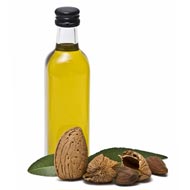 Essential Oils and Carrier Oils are not the same and should not be used interchangeably. They are two different types of substances that are not the same.
 Defined as concentrated volatile natural aromatic compound of a plant. Basically it is an "oily-like", hydrophobic, aromatic essences from plant material (roots, stem, leaves, flowers, bark, seeds, berries, peels, and resin). The main chemical make-up of Essential Oils are: alcohols, aldehydes, esters, ethers, ketones, phenols, terpenes and oxides. Essential oils are usually extracted using steam distillation under pressure, except for citrus oils which are extracted by cold pressing. Essential oils can also be extracted with water distillation (plant material is completely immersed in water and then is boiled, then condensed and cooled down. The oil is then separated out, as it layers on the top of the water, leaving floral waters, which are also called hydrosol or sweet water). Any other method of extraction, like CO2 extraction is labeled an extract (however, there are some Essential oils that can not be extracted with distillation or expression).
 Extracts


